
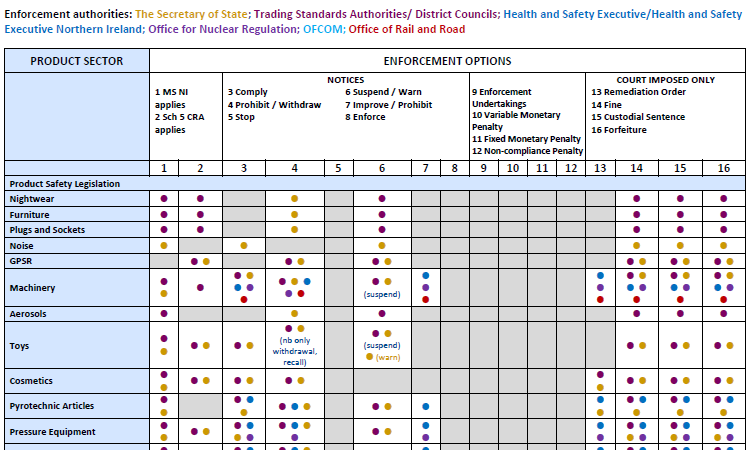
The UK Government published two linked consultations on March 31st that will fundamentally reshape product safety enforcement for electrical and electronic products. The consultation closes June 23, 2026. Most UK importers and distributors haven’t noticed the importance of how this will affect even compliant sales yet.
That’s a problem because what’s being proposed will directly impact whether products can access the UK market and whether you can compete with the flood of non-compliant products, like those sold through distance selling and non-UK e-commerce platforms.
The Enforcement Gap That’s Costing You Sales
Right now, there’s a massive competitive imbalance in the UK electrical products market. As a compliant UK importer or distributor, you pay for testing, certification, proper documentation, and regulatory expertise. You follow the rules because you operate in a jurisdiction where enforcement authorities can reach you and your brand and reputation matters.
Meanwhile, non-UK distance sellers can bypass most of these requirements. They list products on platforms, ship directly to UK consumers, and face minimal enforcement risk, sometimes even avoiding tax altogether. When Trading Standards identifies an unsafe product, the seller simply closes that listing and opens another one under a different name. No recall mechanism. No supply chain accountability. No meaningful consequences.
The result: compliant businesses compete on an unlevel playing field. You invest in safety and compliance while non-compliant sellers undercut you on price.
The UK Government knows this. And they’re proposing to fix it.
The Simple Breakdown Of What’s could actually Change
The consultation proposes a modernized product safety framework built around four interconnected changes:
- Supply chain accountability is expanding. Currently, enforcement focuses on whoever places the product on the UK market. The new framework extends responsibility throughout the supply chain to cover manufacturers, importers, distributors, fulfillment service providers, and online marketplaces. If you’re part of getting that product to a UK consumer, you’re part of the compliance chain.
- Online marketplaces will have legal obligations. Platforms will be required to verify sellers, maintain records, and take action when unsafe products are identified. This becomes a enforceable legal responsibility, so the days of platforms claiming they’re just a marketplace should be coming to an end.
- Enforcement powers are being consolidated and strengthened. The consultation proposes a unified enforcement toolkit across all product sectors. Trading Standards will have expanded powers to obtain information, share data between authorities, and impose penalties. The enforcement matrix in the consultation documents shows the range: compliance notices, suspension orders, prohibition orders, monetary penalties, and court-imposed sanctions including fines and forfeiture.
- Distance sellers face new requirements. If you sell remotely into the UK from outside the UK, you’ll need a UK-established responsible person who can be held accountable for compliance. No UK presence means no market access.
Thousands of unsafe imports highlight an enforcement gap
UK Trading Standards data show massive volumes of dangerous goods entering online markets. For example, in 2024 the Suffolk Trading Standards Imports Team stopped 349,000 unsafe items at Felixstowe port – including 105,000 electrical appliances and over 30,000 chargers and adaptors. Many of these could be destined for online marketplaces. Likewise, a recent industry test of toys on sites like Amazon and eBay found 86% non-compliant and 48% unsafe.
These facts drive home a simple truth: under current UK law, online platforms aren’t held responsible for third-party sellers, so unsafe imports can undercut compliant businesses.
Proposed reforms aim to close that gap
On 31 March 2026 the UK Government published two linked consultations: one on a new product safety framework and one on market surveillance & enforcement. These documents (open for comment until 23 June 2026) outline how duties on importers, online sellers and marketplaces would tighten. For example, the proposals would require all products sold online in the UK to be safe, whether the seller is UK-based or overseas. Online marketplaces would be given specific “due diligence” duties to spot bad actors and cooperate with authorities, similar to recent EU rules.
Enforcement powers would also be consolidated and expanded (including civil penalties as an alternative to criminal prosecution). Taken together, these changes (if enacted) aim to protect responsible businesses by leveling the playing field.
What this means for importers and resellers
At present, UK law allows CE marking under EU rules to continue so long as EU requirements are met. That means many EU-sourced products can enter the UK with minimal extra cost. The new proposals would add UK-specific requirements on traceability, labeling and accountability. In practice, non-compliant goods (often 20–40% cheaper in price due to skipped testing) would face new obstacles, while compliant UK and EU businesses would have clearer support.
For instance, proposed rules would force all actors in the supply chain to keep traceability records (importers, distributors, even overseas sellers) and to cooperate on recalls and checks. The Government explicitly says the aim is to “provide a level playing field” for UK retailers versus abroad.
In short, if you already follow the rules, these reforms (once finalized) could reduce some unfair competition – but you must speak up to shape the final details.
Concrete steps: how to respond
The consultations run in tandem until 23 June 2026. Here are practical actions to take now:
- Read the proposals: Download both consultation documents on GOV.UK (direct links below). Focus on sections relevant to your operations, such as “accountability throughout the supply chain”, marketplace obligations, traceability requirements, and the enforcement toolkit.
- Decide your position: Identify the questions most important for your business. For example:
- Are new duties on overseas sellers or marketplaces reasonable and clear? (Tell the government if you support or want changes to Proposal A12-A14, for example.)
- Do proposed timelines (for phasing in changes) make sense for your supply chain? (The timeline is not specified yet, so this is open – you could argue for a longer transition.)
- What incentives or support do UK importers need to comply smoothly? (You might suggest guidance or funding for testing, for example.)
- Gather evidence: If possible, cite specific examples: e.g. a past incident where an unsafe product slipped through enforcement, or case studies showing costs of compliance. Even simple numbers help. We found sources like the Suffolk TS data and market tests that you can reference.
- Draft your response: Use the online response form or response spreadsheet (links below). You do not have to answer every question. Focus on those B4, B5, … or A3, A8, … that align with your concerns. For instance, you could say “Proposal B4 (civil penalties) will help deter non-compliance, but ensure the penalty levels are proportional.” Or “Proposal A10 (online marketplace duties) should clearly define how fast removals must happen; we suggest 48 hours to remove unsafe listings.” Be specific and solution-focused.
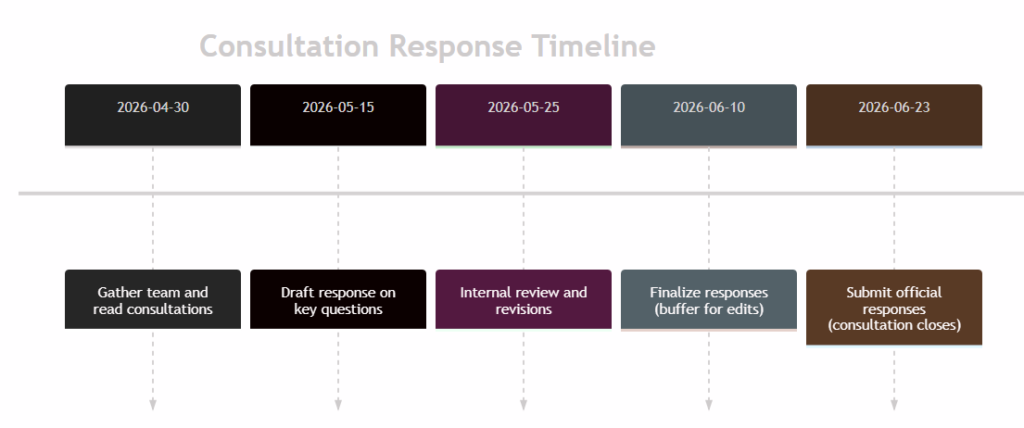
- Review and submit: Have a colleague or legal advisor check your draft. Submit responses by 23rd June via the official site. (We suggest a final internal deadline of early June for review, so you’re not rushing at the last minute.)
Below is a suggested timeline for action:
Share and act.
Once you have sent your response, spread the word. Share this analysis with compliance teams and industry contacts. The wider the input, the stronger the signal to policymakers. The June 23 deadline is only a few weeks away, so act promptly.
Need expert support? If writing a formal consultation response feels daunting, Circumetrics offers hands-on assistance. We can review proposals with you, help craft tailored comments (focusing on issues like supply chain duties, traceability or enforcement), and ensure your voice is heard. Contact our team for a straightforward consultation package – we’re happy to help UK businesses protect their market access and compliance.
LINKS:
https://www.gov.uk/government/consultations/product-regulation-market-surveillance-and-enforcement-framework
https://www.gov.uk/government/consultations/product-regulation-the-uks-new-product-safety-framework