
The Producer Responsibility Obligations (Packaging and Packaging Waste) (Amendment) Regulations 2025:1369
The UK’s updated packaging Extended Producer Responsibility (EPR) legislation takes legal effect on 1 January 2026, and the operational reality is now clear. While businesses have spent two years preparing for EPR in principle, moving forwards the 2025 Amendment Regulations reveal the technical details and compliance operations to avoid costly missteps.
Three areas demand immediate attention: closed-loop recycling provisions that will catch most businesses off-guard, the appointment of Producer Responsibility Organisations that will shape day-to-day compliance, and liability transfers through corporate restructuring that create unexpected obligations.
Executive Summary
From 1 January 2026, the amended Producer Responsibility Obligations (Packaging and Packaging Waste) Regulations 2025:1369, introduce binding operational requirements across the UK. This article focuses on the primary changes affecting business planning through 2026:
Closed-loop recycling provisions:
• Eligibility to offset EPR for food-grade plastic household packaging,
• Direct consumer collection and single-reprocessor requirements that may qualify schemes,
• Additional registration fees and specific offence provisions for incorrect claims.
Producer Responsibility Organisation (PRO) appointments:
• Legal framework now established for PRO delegation of compliance functions that will transfer by Q2 2026,
• Collaboratively INCPEN, BRC, and FDF have expressed interest to operate the PRO,
• PRO will be responsible for calculation of producer fees, EPR fee modulation, RAM development and operation, local authority cost modelling, administering payments, communications and public information, local authority performance, appeal and complaint, and other duties regarding support, monitoring and strategic development.
Group structure and M&A liability transfers:
• Producer obligations and historic data liabilities transfer with brands and businesses,
• Threshold calculations to reassess retrospectively following corporate activity,
• Due diligence should integrate material risks and costs for EPR exposure assessment.
Other key changes:
• Charity exemptions clarified,
• Deposit Return Scheme (DRS) exempt packaging definitions revised to account for low-volume line exemptions.
For brands, importers and manufacturers, these changes affect corporate compliance, supply chain activities and contracting, M&A risk assessment, and recycling claims happening now. Understanding the technical detail means you wont fall short on compliance auditing or face costly reporting mistakes.
Why These Changes Matter Now
pEPR transitioned to the new single point of responsibility in 2024, but the 2025 amendments close loopholes, offer opportunities to offset EPR obligations through takeback, tighten definitions, and establish enforcement mechanisms. Businesses need to know about these updates now to help decision making on recycling investments, design changes, or corporate transactions.
Consider three common scenarios:
1) A packaging supplier invests in take-back infrastructure they believe qualifies for closed-loop credits only to discover the collection mechanism doesn’t meet regulatory requirements.
2) A business reports packaging data assuming this reflects the packaging handling liabilities then faces enforcement action for misinterpreting the requirements and misreporting data.
3) A company acquires a brand without assessing historic packaging obligations triggering immediate reporting duties and retrospective fees and costs.
All three scenarios are preventable with proper understanding of what actually changed on 1 January 2026.
Closed-Loop Recycling: How Schemes Qualify
The closed-loop recycling provisions represent a technically complex element of the amended regulations. Understanding why requires examining three interconnected requirements: what packaging qualifies, how collection must occur, and what reprocessing arrangements are permitted.
What Packaging Qualifies
The regulations restrict closed-loop eligibility to food-grade plastic household packaging only. This immediately disqualifies:
• All non-plastic materials (glass, metal, paper, composite)
• Non-food-grade plastics (industrial packaging, non-food consumer goods)
• Non-household packaging (B2B, commercial, industrial)
The food-grade requirement means the recycled material must meet food contact regulations – not that the original packaging contained food. A plastic bottle for household cleaning products does not qualify, even if collected and recycled perfectly, if it’s not food-grade.
Collection Requirements
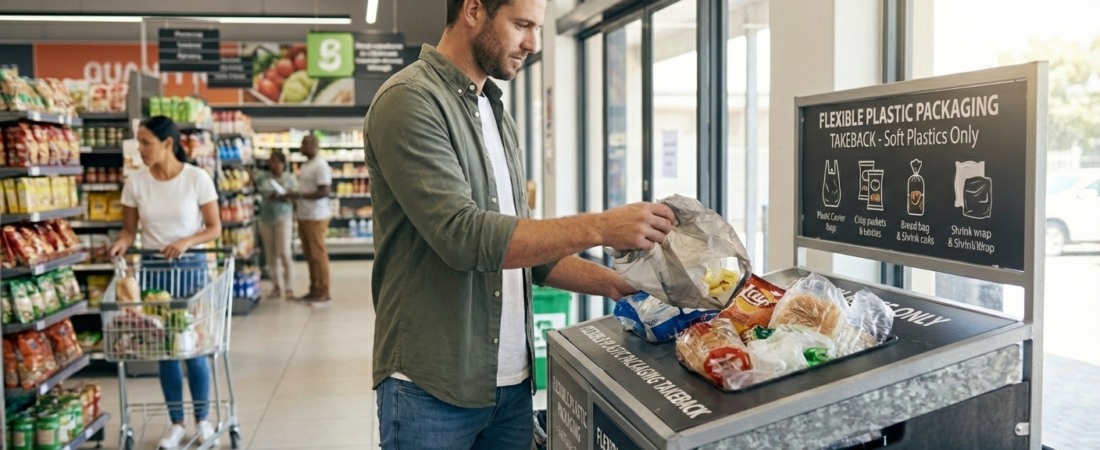
Qualifying packaging waste must be collected directly from consumers by or for the producer. This requirement eliminates most municipal recycling schemes, retail take-back points not operated by the producer, and third-party collection services not acting under producer control and of the packaging they supplied.
“Directly from consumers” means household collection points or producer-operated collection infrastructure. “By or for the producer” means the producer must demonstrate contractual control and operational oversight of the collection activity.
Single Reprocessor Rule
Collected material must be reprocessed by a single reprocessor. This prevents producers from pooling material through waste brokers or consolidation facilities before reprocessing.
The intent is traceability. Producers must be able to evidence that specific packaging tonnages collected from consumers returned to the same producer as equivalent packaging. Under tyopical waste collection systems these factors are not needed leading to most takeback programs operating multiple handling stages and mixed material streams, that break this required chain of custody.
Additional Registration Charges
Producers wishing to report and offset closed-loop tonnages must pay an additional registration charge beyond standard registration fees. The £2,548 charge applies annually and gates access to the closed-loop reporting mechanism.
The charge exists partly as a quality control mechanism, so producers must actively opt-in and maintain evidence standards that justify the tonnage reduction they claim. Clearly there needs to be a valid commercial business case to warrant any direct or indirect investment up front.
Why This Matters for Business Planning
Until now, most businesses exploring closed-loop arrangements assume that any recycling loop closing packaging back to its original use qualifies. The regulations define something far narrower: a legally verifiable chain of custody for food-grade plastic household packaging collected directly from consumers and reprocessed by a single facility under producer control.
Common arrangements that do not qualify include:
• Industrial packaging returned through reverse logistics (not household)
• Plastic films collected through retail take-back (wrong collection model unless retailer is producer)
• Mixed plastic streams consolidated before reprocessing (single reprocessor rule)
• Non-food-grade packaging even if technically recyclable (material limitation)
Producer Responsibility Organisations: Role and Responsibilities – PRO to be appointed
The amended regulations formally establish the legal framework for a single Producer Responsibility Organisations (PRO) to deliver compliance functions on behalf of producers. INCPEN, the British Retail Consortium (BRC), and the Food and Drink Federation (FDF) have collectively expressed interest in operating as a PRO, signalling that an industry led compliance model will emerge. DEFRA will appoint the selected PRO around March 2026.
What PROs Can Do:
• Calculate Producer Fees
• Modulate Producer Fees
• Manage RAM calculations, advisory panel, feedback, publications and guidance
• Local Authority Cost Modelling
• Administering EPR payments
• Communications and Public Information
• Local Authority performance.
The PRO will be fundamental to internal and external operations of UK packaging EPR system, taking away some of these responsibilities currently owned or managed by DEFRA through PackUK.
Group Structure Changes and M&A: Hidden Liabilities Transfer
The 2025 amendments explicitly address how producer obligations transfer during corporate restructuring, mergers, and acquisitions. These provisions create immediate due diligence and integration planning requirements for any transaction involving packaged goods brands or product packaging supply chains.
What Transfers During Corporate Activity
When a business, brand, or packaging operation transfers ownership:
• Producer status transfers with the brand or business activity
• Historic packaging data obligations transfer to the acquiring entity
• Outstanding fee liabilities transfer unless complete pre-transaction
• Evidence retention requirements continue for the full seven-year period under new ownership
This means acquiring a brand in March 2026 could trigger obligations to report packaging data from the previous compliance year, with associated disposal fees and evidence requirements dating back before acquisition.
Retrospective Threshold Changes
Producer thresholds (£2m turnover, 50 tonnes packaging) apply to the legal entity placing packaging on the market. Following acquisition:
• Adjusted turnover calculations apply when brands transfer mid-year,
• Adjusted packaging calculations combine acquired tonnages with existing obligations,
• Small producer status can convert to large producer status retrospectively.
A business operating as a small producer in January 2026 might acquire a brand in June 2026 that pushes combined tonnages above the 50-tonne threshold, triggering large producer reporting and disposal fee obligations that apply from 1 January 2026.
Due Diligence Requirements
Traditional M&A due diligence focuses on product liability, environmental contamination, and regulatory compliance breaches. EPR adds a distinct layer:
• Producer role mapping: Is the target correctly classified? Are there unrecognised producer obligations?
• Historic data quality: Can the target provide seven years of auditable packaging data?
• Fee exposure: What disposal fees have been paid, estimated, or overlooked?
• Closed-loop claims: Has the target made closed-loop declarations? Is supporting evidence adequate?
• Compliance Scheme contracts: Are there ongoing scheme contracts? What obligations survive transaction? What reporting and registration have already been made, and what sales does this represent?
Charity Exemptions
Clarified Exclusion from Producer Registration, Reporting and EPR fees.
The 2025 amendments clarify that registered charities are entirely exempt from producer registration, reporting and EPR fee obligations.
Deposit Return Scheme (DRS) Exempt Packaging: Low-Volume Line Exemptions
Although the UK’s Deposit Return Scheme implementation remains subject to policy development, the 2025 EPR amendments revise exempt packaging definitions to account for ‘low-volume line’ exemptions within DRS scope.
A plastic or metal (and possibly glass subject to policy negotiations with Wales) beverage container would normally fall under DRS fees, labelling and deposit obligations instead of EPR (packaging can only be obligated under DRS OR EPR, not both).
However, where DRS applies to beverage containers, producers of low-volume beverage lines (less than 5,000 units placed on the market across the UK per annum) may qualify for partial exemptions based on volume thresholds. In this instance the EPR amendments ensure that:
• DRS-exempt packaging becomes subject to full EPR obligations (registration and reporting to DRS is still applicable but not for fees, deposits or labelling),
• Producers cannot claim both DRS and closed-loop reductions for the same packaging,
• Evidence requirements differ between DRS participation and EPR reporting,
This prevents double-counting scenarios where packaging is excluded from DRS fees but also excluded from EPR obligations, creating unaccounted end-of-life costs.
For businesses with beverage lines near DRS volume thresholds, this creates planning complexity: crossing the threshold changes both DRS participation status and EPR reporting obligations simultaneously.
What Good Compliance Looks Like in 2026
Robust EPR compliance in 2026 requires integration across legal, commercial, and operational functions.
Closed-loop infrastructure decisions must start with legal qualification assessment, not sustainability objectives. Only invest in collection and reprocessing infrastructure after confirming regulatory eligibility and business case viability.
PRO role will become integral to financial and administrative duties of EPR compliance management. Maintain internal capability to validate submissions, understand determinations, and respond to be capable of handling regulatory queries independently.
Corporate development activity must integrate EPR exposure assessment into due diligence and transaction structuring. Treat producer obligations as you would product liability or environmental legacy.
Evidence systems should capture supplier declarations, material specifications, and collection records as part of standard workflows, not retrospectively at reporting deadlines.
How Circumetrics Supports 2026 EPR Compliance
Circumetrics provides independent, regulator-literate support focused on technical compliance detail:
• EPR liability review and compliance reporting process development,
• Closed-loop feasibility assessment before infrastructure investment or public claims,
• Compliance and contract review for impact and options assessments,
• M&A EPR due diligence integrating producer obligation assessment into transaction planning,
• Producer role and scope assessments across group structures and supply chains,
• Compliance strategy development linking operational activities and product portfolios to specific regulatory requirements and associated costs.
Next Steps
The 2026 regulations are now in force. If your organisation is making decisions about closed-loop infrastructure, packaging activities and liabilities, or corporate transactions without fully understanding these provisions, Circumetrics can help you navigate these uncertainties.
You can use the Contact Us form to discuss specific questions about closed-loop eligibility, compliance, M&A EPR exposure, or how Circumetrics can support your 2026 planning. Initial discussions focus on understanding your situation and identifying where targeted support adds value and closes the gaps.